Removals for W11 Victorian Homes: What to Expect
Posted on 14/05/2026
Moving out of a Victorian property in W11 is rarely a simple "load the van and go" job. These homes are beautiful, full of character, and often a little awkward in all the ways that matter on moving day: narrow staircases, tall sash windows, delicate plasterwork, long hallway turns, and parking that can make even a calm person mutter under their breath. If you are planning removals for a W11 Victorian home, what to expect is a mix of careful preparation, practical problem-solving, and a moving team that understands period properties.
This guide walks you through the realities of moving from a Victorian house or flat in Notting Hill and the wider W11 area. You will learn how the process works, where the usual headaches appear, how to avoid damage, what good removals planning looks like, and which service options make sense depending on your home, timeline, and budget. If you want a broader look at the local area too, a useful starting point is this local overview of living in Notting Hill.
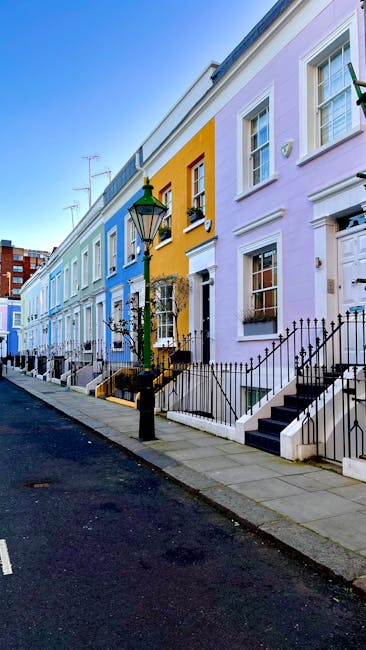
![View of a row of terraced Victorian houses in W11 Notting Hill with colorful facades painted in pastel shades of teal, purple, pink, and mint green. The houses feature large windows with white trims, some with flower boxes containing green plants. Each property has black wrought iron railings and gates, with steps leading up to the entrance doors. The buildings have decorative columns supporting small porches, and some have potted plants placed on window ledges. The sidewalk in front is paved, and a clear blue sky is visible overhead, indicating daytime. The scene offers a glimpse into the typical historic architecture in Notting Hill suitable for professional removals and furniture transport during home relocation projects, with [COMPANY_NAME] often providing services in these areas to facilitate smooth packing and moving processes.](/pub/blogphoto/removals-for-w11-victorian-homes-what-to-expect1.jpg)
Why This Type of Move Needs Special Attention
Victorian homes in W11 are often architecturally lovely and operationally tricky. That combination matters more than many people expect. High ceilings may mean tall wardrobes need to be angled, not carried flat. Original floorboards can be beautiful but vulnerable to scuffs. Corners can be tight. Staircases can bend in awkward ways. Front steps may be steep or narrow. And in some homes, the best route out is not through the front door but through a back entrance, a side access point, or a carefully planned window lift for bulky items.
That is why removals for W11 Victorian homes are not just about transport. They are about access planning, item protection, timing, and choosing the right team for the layout. If you are moving a large sofa, a family piano, or antique furniture, those details become even more important. For example, a piece that looks perfectly manageable in a modern flat can become a two-person, three-angle puzzle in a Victorian terrace.
There is also the local context. Streets around Notting Hill, Portobello Road and neighbouring W11 pockets can be busy, and parking can be limited. That means the move is often shaped by road access as much as by the property itself. If you are moving from a period home, it helps to think ahead about timing, loading distance, and whether a smaller vehicle, larger removal van, or a more flexible service is the best fit. Services like house removals in Notting Hill and flat removals for local homes can be especially relevant depending on the building type.
Expert summary: The biggest difference with Victorian-home removals is not volume alone; it is the combination of access, fragility, and planning. If those three are handled well, the rest usually becomes much easier.
How the Moving Process Usually Works
Most good removals follow the same broad pattern, but for a Victorian home the preparation stage tends to matter more than the loading stage. A solid mover will usually start with a discussion of property type, item list, access points, and any awkward furniture. From there, they can estimate vehicle size, packing needs, number of crew members, and whether specialist handling is required.
In practical terms, the process often looks like this:
- Initial enquiry and survey: You share details about the property, contents, dates, and any access challenges.
- Quotation: A quote is prepared based on the job size, distance, packing requirements, and access conditions.
- Pre-move planning: The team confirms parking, entry routes, fragile items, and any building restrictions.
- Packing and protection: Boxes, wrapping, blankets, and floor protection are used to reduce risk.
- Moving day loading: Furniture is moved carefully, often with a staging plan for larger or delicate items.
- Transport and delivery: Items are transported and unloaded at the destination in an organised way.
- Placement and final checks: Furniture is placed in the right rooms and any issues are reviewed.
For a smaller or quicker move, a flexible service such as man and van removals in Notting Hill may be enough. For bigger family homes, a fuller team and larger vehicle may be the better choice. The right answer depends on the staircase, the furniture, and how much packing you have already done.
It is also worth noting that not every Victorian home move is a standard full-house relocation. Some involve moving from a top-floor conversion; others involve a family house with multiple bedrooms and heavy furniture. That difference changes everything from time planning to vehicle access. If you need a wider view of available options, this services overview is a useful place to compare approaches.
Key Benefits and Practical Advantages
When removals are planned properly for a W11 Victorian home, you get more than a cleaner moving day. You get reduced risk, less stress, and a move that respects both the property and the items inside it.
- Less damage to the home: Period finishes, narrow doorways, and original features are protected more effectively.
- Safer handling of heavy items: Large wardrobes, mirrors, dining tables and pianos are moved with the right technique.
- Fewer surprises: A detailed plan means access issues are identified before they become problems.
- Better time control: When parking, packing, and route planning are sorted early, the day runs more smoothly.
- More confidence with valuables: Fragile and sentimental items are boxed and transported more carefully.
There is also a comfort benefit that people often underestimate. A well-run move reduces the sense that your life is being packed into a blur of cardboard and bubble wrap. That matters, especially in a property with history and personality. You are not just relocating objects; you are transitioning from one lived-in space to another.
For households with delicate furniture, it may make sense to look at specialist furniture removals. If you are moving a piano, artwork, or unusually heavy pieces, then piano removals in Notting Hill can be a much safer option than a general-purpose move. Nobody wants to discover on the stairs that the piano has a stronger opinion about the route than the movers do.
Who This Is For and When It Makes Sense
This kind of move is relevant if you live in, are selling, are renting out, or are leaving a Victorian property in W11. That includes terraced houses, maisonettes, upper-floor conversions, and older buildings with heritage features. It also fits households that have a lot of furniture or a few high-value items that need extra care.
It makes particular sense if any of the following apply:
- You have narrow stairs or awkward landings.
- Your furniture includes antiques, glass, mirrors, or heavy wood pieces.
- Parking near the property is restricted.
- You are moving on a tight timetable.
- You want to avoid DIY lifting and reduce the chance of accidental damage.
- You are moving with children, pets, or work commitments and need structure.
Students and renters in period properties often prefer lighter, more flexible help, such as student removals or a smaller van-based move. Homeowners with larger houses, by contrast, often need a more complete service. If you are comparing providers, a local removal company in Notting Hill should be able to talk clearly about access issues, insurance, and packing options without making the process sound more complicated than it is.
Step-by-Step Guidance for a Smoother Move
The easiest way to think about a Victorian-home move is as a sequence of small decisions. Each one reduces friction later. Here is the practical version.
1. Walk the property before you book
Check stair width, hallway turns, door frames, ceiling height, and any external access points. If you own a measuring tape, use it. If you do not, borrow one. A single awkward wardrobe can influence the whole moving plan.
2. Make a list of fragile and awkward items
Note which pieces need extra care. Include mirrors, lamps, framed artwork, marble-topped tables, plants, and anything sentimental. This helps the moving team plan padding and placement.
3. Decide what should be packed professionally
You can pack some things yourself, but professional packing is often worthwhile for fragile or high-value items. Good packing and boxes support can save time and reduce breakage, especially when the property has awkward access.
4. Confirm parking and loading details
In W11, parking is not a detail to leave until the morning of the move. Confirm where the vehicle can stop, how far it is to the front door, and whether there are local restrictions. A few extra metres can make a big difference to time and labour.
5. Protect the building as well as the belongings
Floor runners, door protectors, blankets and careful lifting all matter. Period homes are particularly prone to scuffs at bottlenecks such as stair turns and front thresholds.
6. Keep essentials separate
Keep chargers, documents, medication, keys, snacks, and a change of clothes in a clearly marked bag. This is one of those boring tips that becomes brilliant the moment you need it.
7. Build in flexibility
Victorian properties sometimes reveal surprises on moving day: a sofa that will not turn the corner, a bed frame that needs disassembly, or an item that is too large for the staircase. Build some margin into your timing, and the whole day feels calmer.
If storage is needed between move-out and move-in, it may be worth looking at storage in Notting Hill. That can be especially useful during chain delays or renovation gaps.
Expert Tips for Better Results
A few practical habits make period-property removals noticeably smoother.
- Disassemble early: Beds, dining tables and some shelving units are easier to move when taken apart before move day.
- Group items by room: Label boxes by destination, not just by contents. "Kitchen" is more useful than "miscellaneous."
- Use the right box strength: Overfilled boxes are a classic cause of dropped items and strained backs.
- Keep screws and fittings together: Put them in labelled bags taped to the furniture they belong to.
- Photograph cable setups: This saves time when reconnecting TVs, desks, and audio equipment.
- Protect stair edges and corners: Period homes often have more contact points than modern builds.
One overlooked tip is to treat the move like a route problem, not just a packing problem. Ask yourself: which items are likely to be hardest to manoeuvre? Those should be packed, wrapped, and planned first. Not last.
For moves that need quicker turnaround, same-day removals in Notting Hill may be an option, but only if access, packing, and volume are realistic. Speed helps only when the move itself is well organised.
Common Mistakes to Avoid
Most moving problems in Victorian homes are preventable. The mistakes tend to be predictable, which is useful because predictable problems are easier to fix.
- Underestimating access: A three-bedroom house can behave like a much harder move if the staircase is tight.
- Leaving packing too late: Rushed packing leads to weak boxes, bad labelling and broken items.
- Forgetting parking logistics: If the van cannot stop nearby, the job gets slower and more expensive.
- Not mentioning delicate items: If the movers do not know about a piano, antique cabinet or oversized mirror, they cannot plan properly.
- Ignoring weather: Rain and wind matter when you are moving items across steps, pavement and open doorways.
- Using the wrong type of service: A lightweight van-based move is not always enough for a large family home.
Another common issue is not asking about insurance and responsibilities in advance. That should never be an awkward topic. If you want a clearer sense of how a professional company approaches risk and protection, review the page on insurance and safety before booking.
And if a quote seems unusually low, pause. Cheap can be fine. Vague is not.
Tools, Resources and Recommendations
The right tools do not make moving glamorous, but they do make it far less chaotic. For a Victorian home, a practical toolkit usually includes:
- strong moving boxes in several sizes
- packing tape and tape dispensers
- bubble wrap or paper wrap for fragile items
- furniture blankets and straps
- labels or marker pens
- door and floor protection
- basic tools for dismantling furniture
- clear bags for cables, screws and fittings
When comparing services, it helps to review company information and policies as well as the move itself. Useful pages include about the company, pricing and quotes, and our prices. Those pages can help you understand what is included and how the service is structured before you decide.
If your move is part of a wider property change, you may also find it helpful to read about savvy property buying in Notting Hill or local property investment considerations. Those are not moving guides as such, but they provide useful context if your relocation is tied to a sale or purchase.
Law, Compliance, Standards and Best Practice
For removals, the main compliance issues are usually practical rather than highly legalistic: safe lifting, proper vehicle use, insurance cover, data handling for customer details, and responsible treatment of your property. A professional removals provider should be able to explain its approach to safety, claims handling, and privacy in plain English.
In the UK, best practice typically includes:
- clear communication about access and timing
- reasonable care with property and possessions
- appropriate insurance arrangements
- safe manual handling and team lifting
- transparent terms for deposits, cancellations, and charges
- good handling of personal data and customer records
It is sensible to review pages such as terms and conditions, privacy policy, and payment and security before confirming a booking. These are not exciting reading, admittedly, but they tell you a lot about professionalism.
You should also look for a company that treats health and safety as a real operational matter rather than a brochure line. A detailed health and safety policy is a good sign, especially when the move involves stairs, fragile fabric, or heavy furniture in a period property.
For waste reduction and disposal choices, recycling and sustainability practices can matter if you are decluttering as part of the move. That is often the hidden benefit of a house move: it forces you to decide what is staying in your life and what is not.
Options and Service Comparison
Different homes need different levels of support. The comparison below is a practical starting point rather than a rigid rulebook.
| Service Option | Best For | Strengths | Watch Outs |
|---|---|---|---|
| Man and van | Small to medium moves, lighter furniture, student or partial moves | Flexible, often faster to arrange, suitable for straightforward access | May not suit large Victorian houses or bulky furniture |
| Full house removals | Family homes, multi-room properties, larger inventories | More crew support, better for complex access and larger loads | Needs more planning and usually more time |
| Furniture-only removal | Large individual items or careful relocation of specific pieces | Good for antiques, sofas, wardrobes, and delicate items | Not ideal for whole-house moves |
| Storage-supported move | Chain delays, renovation gaps, temporary relocation | Provides breathing room and flexibility | Adds an extra handling stage |
| Same-day move | Urgent relocations with limited lead time | Fast response, useful in time-sensitive situations | Only works well if the move is simple enough to execute quickly |
If your Victorian home includes a lot of fitted or heavy furniture, a service such as removal services in Notting Hill may give you a better outcome than trying to make a small vehicle do a larger job. The goal is not to pick the biggest service. It is to pick the right one.
Case Study or Real-World Example
Imagine a two-bedroom Victorian conversion near Portobello Road with a steep communal staircase, a large wardrobe, a dining table, a sofa, several bookcases, and a pair of heavy mirrors. The owners have packed most of the kitchen themselves, but the wardrobe is too tall to move in one piece and one of the mirrors is too fragile to risk without wrapping.
In that situation, a sensible removals plan would likely include a pre-move discussion about stair access, whether the wardrobe should be dismantled, how many crew members are needed, and where the van can legally stop. The movers would also want to know about the fragile mirrors before arrival, not after someone has already lifted them to shoulder height.
The practical result is usually a smoother day. The team is not guessing. The owners are not improvising. The move has a structure, and that structure saves time.
For properties in busy streets or near the area's more congested routes, it can also help to read a local route-specific guide such as moving guidance for Portobello Road and W11. If your move is especially tight on access, the same logic appears in expert removals advice for narrow W11 streets.
Practical Checklist
Use this checklist a few days before the move, then again the evening before. It keeps the job grounded.
- Confirm moving date, arrival time and contact numbers.
- Check access routes, stair width and door clearances.
- Reserve or confirm parking where needed.
- Label boxes by room and priority.
- Set aside documents, keys, medication and chargers.
- Empty and defrost appliances if applicable.
- Disassemble large furniture where possible.
- Separate fragile items and valuables.
- Protect floors, corners and surfaces.
- Keep drinks and snacks available for the day.
- Check insurance and booking terms one last time.
- Plan the first-night essentials box for easy access.
Here is a useful rule of thumb: if you would be frustrated to lose it, break it, or search for it on the first night, keep it separate and clearly marked.
Conclusion
Removals for W11 Victorian homes are not difficult because they are impossible; they are difficult because the properties ask for more care, more planning, and better judgement than a standard modern flat move. Once you understand the access, the furniture, the parking, and the packing load, the whole process becomes much more manageable.
The best results come from choosing the right service level, preparing the property properly, and working with a team that knows how to move through period homes without turning the staircase into a problem-solving exercise. If you are comparing providers, start with the practical pages on local removals, quotes and pricing, and company background. That will give you a more complete picture before you book.
Get a free quote today and see how much you can save.
![View of a row of terraced Victorian houses in W11 Notting Hill with colorful facades painted in pastel shades of teal, purple, pink, and mint green. The houses feature large windows with white trims, some with flower boxes containing green plants. Each property has black wrought iron railings and gates, with steps leading up to the entrance doors. The buildings have decorative columns supporting small porches, and some have potted plants placed on window ledges. The sidewalk in front is paved, and a clear blue sky is visible overhead, indicating daytime. The scene offers a glimpse into the typical historic architecture in Notting Hill suitable for professional removals and furniture transport during home relocation projects, with [COMPANY_NAME] often providing services in these areas to facilitate smooth packing and moving processes.](/pub/blogphoto/removals-for-w11-victorian-homes-what-to-expect3.jpg)


