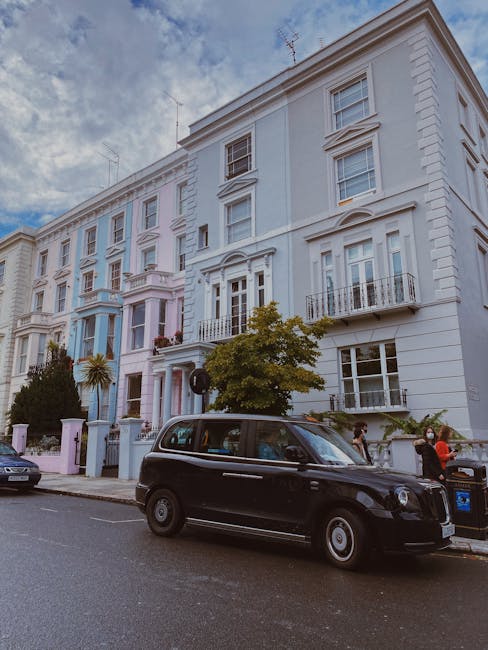
Notting Hill Removals: RBKC parking permits and bay suspensions
Posted on 04/07/2026

If you are moving in Notting Hill, the van itself is only half the story. The other half is parking. Streets can be tight, bays can be controlled, and a perfectly organised move can still wobble if the vehicle has nowhere legal to stop. That is exactly why Notting Hill Removals: RBKC parking permits and bay suspensions matters so much.
Whether you are relocating from a flat off Westbourne Grove, shifting furniture from a Victorian terrace, or coordinating a full household move, knowing how RBKC parking permits and bay suspensions fit into the plan can save time, stress, and those awkward last-minute conversations at the kerb. In our experience, the calmest moves are the ones where parking is sorted early, not the ones where everyone is standing around guessing what the sign says.
This guide explains what the process means in practice, who needs to think about it, where delays usually happen, and how to plan a move that feels controlled rather than chaotic. We will also cover common mistakes, a step-by-step approach, and a practical checklist you can use before moving day. If you want the broader service picture as well, it helps to look at the full removals service overview alongside the parking planning.
Why Notting Hill Removals: RBKC parking permits and bay suspensions Matters
Notting Hill is one of those places where moving lorries and vans have to work a little harder. Narrow roads, resident bays, pay-and-display spaces, loading restrictions, school-run traffic, and event-day pressure all combine to make parking a genuine moving-day issue. If your van cannot stop close enough to the property, everything slows down: loading takes longer, handling becomes harder, and costs can creep up.
RBKC parking permits and bay suspensions are not just administrative extras. They are the mechanism that can make a move possible in streets where waiting is usually limited or controlled. A permit may allow legal parking for the removal vehicle, while a bay suspension can temporarily reserve a stretch of kerbside so the van has room to load and unload. Simple idea. Big impact.
That matters most when time is tight. A standard one-bedroom flat move can still turn messy if the van has to park two streets away and the team is hauling boxes under pressure. And if you are moving something awkward, like a sofa or piano, those extra metres can become the difference between an easy carry and a real headache. For bulky items, it is worth understanding the moving plan in advance, especially if you are also arranging bulky item removals in Notting Hill.
There is also a financial side. Parking problems often create hidden time costs, and hidden time costs are where moves get expensive. If you have already read about avoid hidden fees in Notting Hill removals, you will know why clear planning matters.
How Notting Hill Removals: RBKC parking permits and bay suspensions Works
At a practical level, the process is about matching your move date, vehicle size, property access, and local parking rules. Most people do not need to memorise the parking code or become a traffic expert. What they do need is a sensible sequence.
First, work out where the removal van will stop. Is there a legal loading bay nearby? A resident bay? A single yellow line with time restrictions? Or is the road so restricted that a bay suspension is the cleaner option? Once you know that, you can decide whether the move needs a permit, a suspension, both, or neither.
Second, check the timing. Some moves are straightforward in the morning, while others become awkward later in the day because of traffic, school runs, or local activity. If your route touches busy parts of the neighbourhood, it can help to compare timings with the best times to move near Westbourne Grove.
Third, build in a buffer. A permit or suspension may be approved for a window of time, but real life rarely lines up perfectly. The lift is slow. A neighbour is in the hallway. Someone cannot find the keys. It happens. A little spare time is not luxurious; it is sensible.
Finally, make sure the details on the booking match the actual vehicle and address. This sounds basic, but it is where many problems start. A bay arranged for one location is no good if the van ends up in the wrong side street. Not ideal, as you can imagine.
Key Benefits and Practical Advantages
When the parking side is handled well, the whole move feels smoother. That is the real benefit. But there are several practical advantages worth spelling out.
- Less walking distance: the removal team can carry items from door to van with fewer delays and less strain.
- Better timing: access close to the property usually shortens loading and unloading time.
- Lower risk of disruption: fewer unexpected parking changes, fewer arguments with motorists, fewer "just one minute" problems.
- Safer handling: heavy or fragile items do not need to be moved as far, which reduces knock risk.
- Cleaner cost control: fewer hold-ups often means a more predictable quote and fewer overruns.
There is a quieter benefit too: peace of mind. Anyone who has moved in London knows the feeling of staring out of the window, hoping the van will not be boxed in by a refuse lorry or forced to circle around the block. When parking is planned properly, you can focus on the boxes, the paperwork, and the kettle. Tea helps. It always helps.
If you are moving from a flat rather than a house, this becomes even more valuable. Space is tighter, stairwells are narrower, and on-street access matters more. That is one reason flat removals in Notting Hill often benefit from careful parking coordination.
Who This Is For and When It Makes Sense
RBKC parking permits and bay suspensions are relevant for more people than you might expect. They are not only for big household moves or expensive furniture jobs. They make sense whenever a vehicle needs reliable curbside access in an area where parking is restricted or uncertain.
This usually includes:
- homeowners moving out of or into a street with controlled bays
- tenants leaving a flat with limited front-door access
- students moving between shared houses or studio flats
- businesses relocating stock, equipment, or office furniture
- anyone using a van service for same-day or emergency removals
It also becomes more relevant if you are handling a move in a period of pressure, like the end of a tenancy, completion day, or a quick turnaround between properties. In those situations, a parking hiccup can snowball fast. One late van arrival and suddenly the whole day is behind. It is a bit unfair, but that is London parking for you.
If your move is urgent, this is where same-day removals in Notting Hill can be a sensible option, especially when combined with advance access planning.
Step-by-Step Guidance
Here is the cleanest way to approach the parking side of your move without turning it into a second job.
- Confirm the moving date early. The earlier you lock in the date, the easier it is to align parking arrangements.
- Inspect the street layout. Look for bay types, signage, yellow line restrictions, width issues, and whether a van can stop legally and safely close to the property.
- Decide whether a permit or bay suspension is needed. If there is no dependable space, a suspension may be more useful than hoping for luck.
- Match the vehicle to the access. A larger van is not always better if the street is awkward. Sometimes a more agile vehicle is the smarter choice.
- Book access arrangements with enough lead time. Last-minute plans can work, but they are obviously less forgiving.
- Share the access details with the removal team. Exact address, parking constraints, floor level, lift access, and any loading instructions matter.
- Prepare the property for loading. Boxes labelled, dismantled furniture ready, and a clear path to the door all help.
- On the day, keep communication open. If anything changes, such as a road obstruction or a neighbour issue, tell the team immediately.
A small but useful habit: take a photo of the parking signs and the frontage the day before. It is not glamorous, but it saves arguments later. Also, if you know the move involves tight staircases or awkward access points, you may find the guidance in access issues on Lansdowne Road surprisingly relevant, even if your street is a different one.
Expert Tips for Better Results
The difference between an acceptable move and a genuinely smooth one is usually in the small things. Here are the things we would prioritise.
- Do not leave parking until the final week. The earlier you think about the van's stopping point, the fewer surprises you get.
- Measure the property access properly. Narrow entrances, long hallways, and awkward stair turns can influence where the van should park.
- Use the right service type. A small man-and-van setup may suit a lighter move, while a larger household relocation needs a more structured plan.
- Keep fragile items apart from heavy traffic. If the van is parked further away than expected, delicate items are more exposed during the extra carry.
- Allow for loading delays caused by neighbours and street movement. A quiet weekday morning is very different from a busy Friday afternoon.
One thing people often miss: parking and packing should be planned together. If the van bay is only available for a limited window, then boxes need to be ready before the team arrives. You do not want the team waiting while someone is still taping the bottom of a wardrobe box. Truth be told, that happens more often than anyone admits.
If you need packing support, it is worth reviewing packing and boxes in Notting Hill so the loading sequence is more efficient from the start.
Common Mistakes to Avoid
Most parking-related moving problems are avoidable. The frustrating part is that they are usually simple mistakes. Annoying, yes. Hard to prevent, no.
- Assuming a space will be free. In a busy part of Notting Hill, that is a gamble, not a plan.
- Forgetting to check exact bay restrictions. A bay can look useful and still be the wrong type or the wrong timeslot.
- Booking the removal before confirming access. You want the logistics to support the move, not fight it.
- Underestimating loading time. Stairs, lifts, heavy wardrobes, and narrow doorframes all add time.
- Not telling the team about nearby roadworks or event disruption. These things matter more than people think.
- Leaving furniture partly dismantled. If the van has to park further away, extra assembly work on the day becomes a real drag.
There is also the mistake of choosing the cheapest option without checking whether the parking issue is included. Sometimes the "cheap" quote is only cheap because the difficult part has been quietly ignored. Not very helpful, that.
To keep costs clearer overall, you may also want to read pricing and quotes before you book.
Tools, Resources and Recommendations
You do not need a pile of specialist tools to manage parking and bay suspensions well, but a few simple resources help enormously.
- A street photo: useful for capturing bay signs, road markings, and the front of the property.
- A floor plan or access note: especially handy in flats or older buildings where carrying distance matters.
- A written moving schedule: arrival time, loading order, key handover, and any access windows.
- Box labels: room names make unloading faster and reduce confusion in tight spaces.
- Basic protective materials: blankets, tape, and wrap for furniture that may need to be moved quickly.
For larger jobs, it can help to think about the vehicle itself. A proper removal van in Notting Hill is not just transport; it is part of the access strategy. The right van size and the right parking position often go hand in hand.
Also, if your move involves multiple loads, short-term holding, or a staged transition, storage can reduce pressure on the parking window. That can be a lifesaver when keys are delayed or completion timing gets messy. London, eh.
For those situations, storage in Notting Hill may be worth considering as part of the moving plan.
Law, Compliance, Standards, or Best Practice
Parking permits and bay suspensions sit inside a wider framework of local parking control, road safety, and public-space management. The exact process can vary by street, restriction type, and timing, so it is wise to treat any move as a case-by-case logistics job rather than assuming one neighbourhood rule fits all.
Good practice usually means:
- checking the local restrictions for the exact address
- making sure the vehicle is parked legally and safely
- not blocking access for emergency services, pedestrians, or neighbouring properties
- allowing enough time for loading so no one feels rushed into risky handling
- keeping all details consistent across the booking, access notes, and day-of-arrival plan
If a parking arrangement is required, the safest approach is to plan early and avoid informal assumptions. That is especially true for bay suspensions, because they affect more than one vehicle and can have wider street impact. In plain English: if it looks like a minor detail, it probably is not.
For companies handling removals, there is also a duty to work carefully and safely with lifting, loading, vehicle positioning, and customer access. If you want to understand broader operational standards, the health and safety policy is a useful page to review.
Options, Methods, or Comparison Table
There is no one-size-fits-all answer for parking access in Notting Hill. The right approach depends on the street, the move size, and how much certainty you want on the day.
| Option | Best for | Pros | Watch-outs |
|---|---|---|---|
| Standard on-street parking | Quiet streets with reliable loading space | Simple and cost-effective | Risk of spaces being taken, especially later in the day |
| Parking permit | Moves where legal parking is needed but a bay may remain usable | More predictable than hoping for a space | Still depends on exact local conditions and timing |
| Bay suspension | Busy streets or addresses with limited curbside certainty | Creates reserved loading space close to the property | Needs careful planning and clear timing |
| Smaller vehicle or split loads | Very tight access or awkward roads | Can improve manoeuvrability | May take longer if the job is large |
There is a practical trade-off here. A bay suspension can be the most helpful option on paper, but a smaller vehicle and sharper loading plan can sometimes be better if the street is awkward or busy. In other words, the best answer is the one that fits the actual road, not just the postcode.
Case Study or Real-World Example
Here is a realistic example from a typical Notting Hill move. A tenant was leaving a two-bedroom flat near a narrow residential road, with furniture spread across two floors and a lift that was not always dependable. The first instinct was to hope for a street space on the day. Understandable, but risky.
Instead, the move was broken into three parts. First, the access was checked the week before. Second, the street parking situation was reviewed and a reserved space was arranged. Third, boxes were labelled by room so the team could unload quickly and place items straight into the new property.
The result was not magical. The day still had its moments: a slightly slow key handover, a neighbour leaving at the wrong time, and one sofa that did not love the staircase very much. But because the parking side was organised, none of those issues became serious delays. The van stayed close, the team kept momentum, and the move felt like one job rather than five jobs stitched together.
That is usually the goal. Not perfection. Just a day that stays under control.
Practical Checklist
Use this checklist before moving day. It is short on purpose.
- Confirm the move date and arrival window
- Check the exact property access and street restrictions
- Decide whether a permit, bay suspension, or alternative parking plan is needed
- Share the access details with the removals team
- Prepare boxes and label them clearly
- Dismantle bulky furniture if required
- Take photos of bay signs and road layout
- Check whether lifts, gates, or entry codes need to be arranged
- Allow a time buffer for loading and traffic delays
- Keep your phone charged and nearby on the day
Expert summary: if the street access is simple, moving is simpler. If the street access is uncertain, make it certain early. That one decision can change the tone of the whole day.
Choosing a team that understands local roads, timing pressure, and access planning can make a real difference. If you want to compare service types and see which one suits your move, take a look at man and van in Notting Hill, man with van in Notting Hill, and house removals in Notting Hill for a clearer sense of what fits your situation.
Get a free quote today and see how much you can save.
Conclusion
Notting Hill moves are rarely hard because of the boxes alone. They are hard because of access, timing, and parking. RBKC parking permits and bay suspensions give you a way to remove some of that uncertainty before moving day arrives, which is exactly what you want in a busy part of London.
If you plan early, confirm the access details, and match the vehicle to the street, the whole process becomes calmer. Less circling. Less carrying. Fewer surprises. And honestly, that is the sort of improvement you feel immediately when the first box comes out of the van without drama.
Whether you are moving a studio flat, a family home, or a business space, the smartest approach is the one that respects the street as much as the schedule. Sort the parking, and the rest has room to breathe. That makes a difference, and you will notice it straight away.